Poverty Alleviation with Zakat-based Redistribution Model
Department of Economics and Finance, Istanbul Aydin University
Abstract
This study develops a dynamic zakat-based redistribution model within an overlapping generations framework to examine domestic poverty alleviation. The model incorporates four endogenous income classes and formalizes transfers from surplus-income individuals to economically vulnerable retirees and structurally poor groups. Zakat is evaluated against intergenerational, universal, and targeted poverty transfers under identical demographic structures and fiscal effort.Within the modeled framework, zakat outperforms alternative redistribution mechanisms. Its surplus-based structure targets absolute poverty while limiting fiscal pressure on near-threshold groups. It achieves the highest utility improvement-to-disruption ratio and generates pronounced reductions in income inequality and poverty depth under baseline conditions, with outcomes remaining robust across alternative macroeconomic and demographic environments.
By formalizing zakat as a surplus-conditioned redistribution rule, the study contributes a theoretical framework for evaluating targeted poverty alleviation under fiscal and administrative constraints. The findings offer policy-relevant design insights for reducing persistent poverty while preserving efficiency and social sustainability.
Keywords and classifications
Key findings
Under the baseline calibration, zakat achieves a utility improvement-to-disruption ratio of 5.85, compared with 1.57 for intergenerational transfers, 3.05 for universal redistribution, and 4.80 for targeted transfers. All four systems are evaluated under the same demographic structure and a 2.5% contribution rate.
The largest welfare improvement occurs among elderly individuals in Class D, whose welfare increases by 28.32% under zakat. The corresponding gains are 5.28% under intergenerational transfers, 6.88% under universal redistribution, and 6.11% under targeted transfers, indicating that zakat directs greater support toward those experiencing the deepest deprivation.
Zakat produces the strongest reduction in income inequality among the evaluated systems. The Gini coefficient falls from 0.3285 to 0.3130, a reduction of 4.72%, while the Hoover and Theil indices decline by 4.22% and 10.08%, respectively.
The normalized poverty gap declines from 0.0439 to 0.0337 under zakat, representing a 23.23% reduction. This improvement exceeds the reductions generated by intergenerational transfers at 7.52%, universal redistribution at 10.48%, and targeted transfers at 10.02%.
Robustness simulations show that zakat retains its redistributive advantages across most macroeconomic and demographic conditions, although its effectiveness remains conditional. A 10% deflation reduces the poverty gap by 22.55%, whereas 10% inflation raises it by 37.98%; similarly, greater upward mobility from Class D reduces poverty by 33.83%, while a 15% increase in Class D births raises it by 64.99%.
1. Introduction
Poverty remains one of the most persistent challenges facing the global economy. Despite decades of growth, nearly half of the world’s population, approximately 44 percent, still lives on less than USD 6.85 per day, while almost 700 million people survive on less than USD 2.15 per day (World Bank, 2024). Children and older adults are particularly vulnerable, as prolonged deprivation undermines health, human capital accumulation, and intergenerational mobility. These conditions underscore the continuing need for effective and inclusive poverty alleviation mechanisms.
The scale of deprivation contrasts sharply with global wealth concentration. Existing estimates indicate that, under efficient targeting, relatively modest redistributive resources could substantially reduce extreme poverty. Oxfam estimates that the annual resources required to eliminate extreme poverty amount to roughly 4 percent of the one-year increase in global billionaire wealth (Maitland et al., 2026). Yet despite the efforts of multilateral institutions and non-governmental organizations, income inequality persists, and many redistributive mechanisms remain limited in coverage, targeting precision, and fiscal efficiency.
This paper revisits zakat, a classical yet under-theorized institution, as a formal fiscal redistribution mechanism. Rooted in Islamic economic thought, zakat requires eligible individuals to contribute a fixed proportion, typically 2.5 percent, of surplus wealth to specified recipient categories, primarily the poor. Unlike voluntary charity, zakat is a religious obligation governed by precise eligibility and distribution rules, including surplus thresholds known as nisab. Although widely practiced in Muslim-majority societies, its redistributive logic remains underexplored within mainstream public finance and population economics. Its surplus-conditioned structure abstracts from labor market participation and formal income reporting, making it analytically relevant in settings characterized by informality, demographic change, or limited fiscal capacity.
Theoretically, zakat embodies a vertical and targeted redistribution logic aligned with models of poverty traps, intergenerational inequality, and absolute poverty alleviation. By exempting subsistence-level income and focusing on realized surplus, zakat may limit distortions among economically marginal agents while concentrating resources on structurally deprived populations. These features motivate its evaluation within an overlapping generations framework, where life-cycle dynamics, savings behavior, and intergenerational transitions shape poverty and inequality outcomes.
To this end, the paper develops a dynamic overlapping generations model that formalizes zakat as an endogenous redistribution rule operating across four income-based classes and two life-cycle stages. Individuals with surplus income above a basic-needs threshold become zakat payers, while the poorest and vulnerable elderly receive transfers. The model incorporates rational utility maximization, intertemporal savings-consumption behavior, endogenous class mobility, and demographic evolution, enabling comparison with intergenerational, universal, and targeted poverty transfers under identical demographic structures and fiscal effort.
The contribution is threefold. First, the paper develops one of the first dynamic overlapping generations frameworks to formalize zakat as an endogenous surplus-based redistribution rule using analytical tools standard in public finance and population economics. Second, it provides simulation-based evidence on how surplus-conditioned redistribution compares with conventional transfer mechanisms in poverty alleviation, inequality reduction, and life-cycle welfare distribution. Third, by abstracting from theological considerations and focusing on economic structure, the study contributes to debates on targeted redistribution systems that balance equity, efficiency, and long-run social sustainability under constrained fiscal capacity.
2. Literature Review
2.1. Theoretical Literature Review
Welfare economics distinguishes between horizontal redistribution across the life cycle, such as pensions or health insurance, and vertical redistribution across income groups to address poverty and inequality (Esping-Andersen & Myles, 2011). Contemporary welfare systems largely emphasize horizontal redistribution through contributory social insurance, while vertical redistribution relies on progressive taxation and targeted transfers. Within this framework, zakat represents a vertical, surplus-based mechanism mandating transfers from individuals above a basic needs threshold to economically vulnerable groups under fixed institutional rules.
The design of optimal redistribution has long been debated in economics. The Mirrlees (1971) framework emphasizes equity-efficiency trade-offs in nonlinear taxation (Mankiw et al., 2009; Piketty & Saez, 2012), while alternatives such as universal basic income (UBI) (Van Parijs, 2000; Hoynes & Rothstein, 2019) and negative income tax (NIT) schemes (Friedman, 1962) provide transfers based on income shortfalls. Although these approaches differ in administrative complexity and targeting precision, they share the goal of poverty reduction (Stiglitz, 2016). A persistent challenge is that uniform or poorly targeted contributions may impose disproportionate burdens on low-income agents, reducing efficiency and labor participation (Kaplanoglou & Newbery, 2008; Bussolo et al., 2020).
Within this context, zakat introduces a redistribution logic based on residual surplus rather than gross labor income. Contributions are assessed only after essential needs are met and do not rely on formal labor market participation or centralized income verification, making the mechanism relevant for economies with high informality or limited tax capacity.
Despite its long-standing institutional role in Muslim societies, zakat has rarely been embedded in dynamic economic models used in public finance. Early contributions treated zakat as an exogenous religious obligation within static consumption frameworks (Khan, 1984), lacking intertemporal optimization, wealth accumulation, or dynamic redistribution (Tagel-Din, 1984; Hasan, 2005). Later studies introduced agent classifications but remained microeconomic and static (Iqbal, 1985; Abdellah, 1985). Thus, zakat has not been modeled as a rule-based mechanism within a macroeconomic system that captures income evolution, intergenerational mobility, or lifecycle dynamics, nor analyzed within an overlapping generations framework (Auerbach, 1989) or systematically linked to poverty trap theory (Banerjee & Newman, 1994; Azariadis & Stachurski, 2005).
This study addresses these gaps by developing a dynamic OLG model in which zakat operates as a surplus-conditioned redistribution rule embedded within a macroeconomic structure. Agents are endogenously classified as payers, recipients, or neutrals based on lifetime income trajectories, allowing outcomes to be evaluated across generations under varying inflation and demographic conditions. By focusing on economic rule structure rather than theological foundations, the framework enables comparison with secular redistribution mechanisms, consistent with Popova (2014).
2.2. Empirical Literature
Empirical studies on zakat and poverty alleviation have expanded in recent years, particularly in Muslim-majority countries, with most evidence focusing on micro-level outcomes. Existing studies document poverty-reducing or consumption-enhancing effects in Pakistan (Akram & Afzal, 2014), Egypt (Abdelbaki, 2014), Indonesia (Mawardi et al., 2022; Herianingrum et al., 2024), Malaysia (Abdullah & Sapiei, 2018), Bangladesh (Hassan et al., 2024), Tunisia (Bouanani & Belhadj, 2020), and Nigeria (Yakasai et al., 2021).
Program-level evaluations also suggest substantial redistributive potential. Targeted zakat interventions are associated with reductions in absolute poverty in Indonesia (Beik, 2016) and income inequality in Malaysia (Patmawati, 2006; Zulkifli et al., 2021). Sovbetov (2026) simulates a global zakat-like redistribution system and finds that reallocating 1 to 2.5 percent of global GDP from high-income to low-income countries could raise recipients’ per capita income by up to 61% and eliminate extreme poverty within three years. These findings highlight zakat’s potential when supported by transparent governance and institutional design (Ali & Hatta, 2014).
Despite this evidence, important limitations persist. Most studies remain microeconomic or single-country in scope, limiting insights into macroeconomic spillovers, intergenerational dynamics, and long-run poverty persistence (Sarif et al., 2024). Zakat is rarely benchmarked against alternative redistribution systems such as UBI, NIT, or social pensions, despite emerging work on tax–zakat integration (Djatmiko, 2019). Its performance under macroeconomic shocks and demographic transitions also remains largely unexplored.
Evaluations of non-religious redistribution mechanisms provide useful comparative benchmarks. UBI-style transfers improve nutrition, education, and asset accumulation but raise concerns regarding fiscal sustainability and targeting precision (Haushofer & Shapiro, 2016). Evidence from NIT experiments and social pension programs also shows welfare gains among low-income and elderly populations, often accompanied by fiscal costs and efficiency losses for near-threshold contributors (Hum & Simpson, 1993; Barrientos, 2025).
Zakat differs from these mechanisms through its surplus-based redistribution logic. Contributions are drawn only from individuals whose resources exceed the nisab threshold, while transfers are directed toward those below the poverty line. This creates a three-tier configuration: surplus-holders (Class A and upper Class B) contribute, the poorest (Class D and vulnerable elderly in Class C) receive, and the middle segment remains unaffected.
Motivated by these limitations, this study develops a dynamic overlapping generations framework that models zakat as a surplus-based, class-targeted redistribution mechanism and benchmarks it against intergenerational, universal, and targeted poverty transfers. By capturing class-specific welfare effects, income dynamics, and intergenerational poverty persistence, the framework situates zakat within a comparative analysis of redistribution design.
3. Model
This section develops a dynamic zakat redistribution model within an overlapping generations (OLG) framework. Individuals live for two periods: they work, earn income, and consume during youth; and they retire and consume out of savings in the second period. The model incorporates zakat obligations as a function of endogenously determined savings, allowing us to derive the conditions under which individuals become payers, recipients, or neutrals, and to evaluate zakat’s effects on poverty and consumption.
3.1. Economic Environment and Agent Optimization Without Zakat
Time is discrete and infinite, indexed by  .
At each date t, a measure
.
At each date t, a measure  of identical individuals is born. Each lives for two periods: youth (t) and old age (t+1). In the first period, the agent works and earns income
  ;
in the second period, he retires and consumes out of savings. There is no labor income in second period.
;
in the second period, he retires and consumes out of savings. There is no labor income in second period.
The economy uses fiat money as a store of value. Let  be the value of money at time t, and define the gross rate of price
inflation as
be the value of money at time t, and define the gross rate of price
inflation as  .
When
.
When  ,
prices rise over time; when
,
prices rise over time; when  ,
there is deflation.
,
there is deflation.
Agents have no bequests and derive utility from consumption in both periods of life. Preferences are represented by the utility function:

where
 is consumption during working age at period t,
  is consumption during retirement at period t+1. The
  is discount factor reflecting time preference.
The agent allocates income between first-period consumption and savings. Savings take the form of money holdings  ,
which are carried forward to finance second-period consumption. The budget constraints are:
,
which are carried forward to finance second-period consumption. The budget constraints are:


Substituting (3.03) into (3.01), and using (3.02) to express savings, the agent’s lifetime utility becomes:

The agent chooses to maximize (3.04). Taking the derivative with respect to  :
:

Solving the first-order condition:



3.2. Zakat Mechanism and Agent Optimization With Zakat
Zakat is a wealth-based redistributive obligation imposed on individuals whose residual income or savings exceed a minimum threshold, known as nisab. The minimum living standard is represented by the poverty line (PL). For analytical tractability, we define the gross nisab as twice the poverty line (2PL), reflecting the requirement that individuals must first secure basic needs before any zakat liability arises.
After deducting minimum living expenses equal to PL, an individual with income or savings exceeding 2PL retains a net surplus above PL, which constitutes the net nisab relevant for zakat assessment. Zakat is therefore levied exclusively on realized surplus rather than subsistence income.
Within this framework, we formulate a two-period optimization problem in which zakat obligations may arise during both working age and retirement, depending on the individual’s income and savings positions.
Zakat Assessment Rules
In each period, individuals are either payers, neutrals, or recipients, depending on their economic position relative to the zakat threshold.
· First Period (Working-Age):
-
Payer:
Pays zakat if income exceeds basic living costs and this surplus exceeds nisab (set to PL). That is, if  ,
then
,
then 
-
Receiver:
Receives zakat if  ,
then
,
then  .
.
-
Neutral:
Neither pays nor receives zakat if 
· Second Period (Retired Old):
-
Let savings from first-period be 
-
Payer:
Pays zakat if saved wealth after subtracting PL again exceeds nisab; that is, 
-
Receiver:
Receives zakat if  ,
then
,
then  .
.
-
Neutral:
Neither pays nor receives zakat if 
The zakat paid in each period is:


where
 is a zakat rate, typically set at 2.5%.
Let  denote the income distribution function across the young generation at time t. Given optimal consumption behavior
  ,
we compute the total zakat paid across all payers (i.e., those whose residual income or savings exceed
,
we compute the total zakat paid across all payers (i.e., those whose residual income or savings exceed  ):
):

This zakat pool is then equally redistributed among the receivers, whose first-period income or second-period savings fall below the poverty line:

where
 is total zakat pool and
  is number of eligible receivers at time t.
The agent’s budget constraints become:


Note that  is fully consumed in period t, so it enters directly into first-period consumption but not intertemporal allocation[1].
Utility maximization involves a piecewise problem, depending on zakat status in each period:
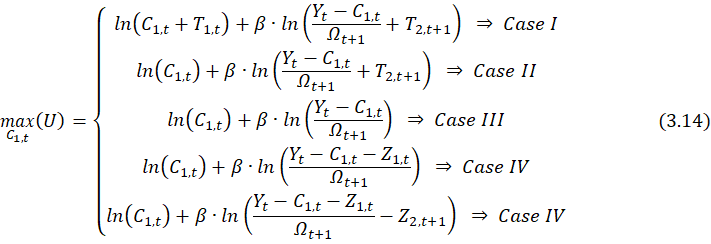
· Case I: Receivers in both periods ( and
and

 )
)
· Case II:
Neutral in first period, but receiver in second period ( and
)
and
)
· Case III: Neutrals in both periods (infeasible under optimization; see Appendix A for proof).
· Case IV:
Payer in first period, but neutral in second period. ( and
and  )
)
· Case V: Payer in both periods (
and  )
)
Poverty alleviation in the model occurs when transfers received by low-income agents raise post-transfer consumption above the poverty line. In particular, for recipients in Case I and Case II, and
 enter consumption directly in (3.15), so that post-transfer consumption satisfies
  and
and  for a subset of recipients, reducing poverty depth and, through higher retirement resources, lowering old-age poverty persistence.
The agent’s lifetime utility in generalized form is:

Differentiating the utility function (3.15) with respect to ,
and using the envelope condition ,
we get:

This nonlinear equation defines the interior solution for  under generalized zakat rules. In numerical simulations, the terms
  ,
,
 ,
,
and are evaluated conditionally based on and
using the classification rules above.
,
,
and are evaluated conditionally based on and
using the classification rules above.
3.3. Endogenous Classification: Zakat Status and Income Classes
Agents are endogenously classified into one of three zakat statuses in each period: payer, recipient, or neutral. These statuses depend on whether the agent’s income (in the first period) and savings (in the second period) cross predefined thresholds linked to the poverty line (PL). Based on rules as described in Section 3.2, four income classes are identified:
· Class A (Wealthy): Represents case V that pays zakat in both periods. These individuals earn far above the threshold, allowing them to pay zakat in both periods and still consume well above the poverty line. Thus, they maintain surplus wealth in both periods and pay zakat consistently.
1st
Period:  (3.17)
2nd Period:  (3.18)
Life-Time Budget →
 (3.19)
· Class B (Upper-middle): Represents case IV that pays zakat in the first period ( ), but enters the neutral zone in the second period, with savings between PL
and 2PL, not sufficient to trigger second-period zakat liability.
), but enters the neutral zone in the second period, with savings between PL
and 2PL, not sufficient to trigger second-period zakat liability.
1st
Period:  (3.20)
2nd Period:  (3.21)
Life-Time Budget →
LTBB =  (3.22)
· Class C (Lower-middle): Represents case II that is neutral in the first period since income lies below the zakat threshold
(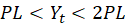 ), but becomes a zakat recipient in the second period, as proven in Appendix A, since optimal savings fall below PL under utility maximization.
1st
Period:  (3.23)
2nd Period:  (3.24)
Life-Time Budget →
LTBC = 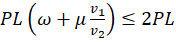 (3.25)
· Class D (Poor):
Represents case I that receives zakat in both periods. Income is insufficient to meet basic needs ( ), and retirement wealth is also below the zakat eligibility threshold. They survive by minimizing their first-period consumption to the starvation line
  where
where
 ,
and carry over the rest for second-period survival.
,
and carry over the rest for second-period survival.
1st
Period:  (3.26)
2nd Period:  (3.27)
Life-Time Budget →
LTBD :  (3.28)
3.4. Population Dynamics and Class Transition Matrix
Each generation is born into one of the three main income classes (A, B, C, or D) with probabilities:

Intergenerational mobility is governed by a Markov transition matrix  ,
where each element
,
where each element  represents the probability that an individual born into class
 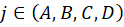 moves to class
  in the next generation:

Thus, the intergenerational evolution of class structure is given by:

Each row of  represents the mobility profile of individuals from a given class. Zakat redistribution affects these transition probabilities through three primary mechanisms:
· Poverty Exit: Recipients in Class D may move to Class C if zakat receipts are large enough to generate second-period savings above the survival threshold.
· Class Stability: Agents in Classes B and C often exhibit high persistence due to minimal net savings (Class C) or limited second-period surplus (Class B).
· Downward Mobility: In the absence of redistribution (e.g., zakat non-compliance or inefficient allocation), individuals from Class C or even Class B may fall into poverty in old age due to inflationary erosion of savings or economic shocks.
The transition matrix can be parameterized and calibrated to simulate dynamic poverty traps, class convergence, or upward mobility under different policy scenarios. For example, a strong redistribution regime (high  ,
efficinet targeting of
,
efficinet targeting of  )
increases
)
increases  ,
while redistribution may increase
,
while redistribution may increase  or
or
 .
.
A steady-state class distribution  satisfies
 , which allows us to examine the long-run effects of zakat policy on poverty prevalence, middle-class stability, and inequality across generations.
Transitions are modeled as a function of two main components: inherited natural skills (NS) and acquired skills (AS), such that:

Here,
 and
and
 are weights capturing the relative importance of innate ability and social environment in determining upward or downward mobility. Natural skills represent genetic or cognitive attributes (e.g., IQ, physical ability), whereas acquired skills refer to outcomes shaped by education, training, and access to financial resources.


The transitions between social classes are influenced by individuals' natural and acquired skills, which collectively shape their socioeconomic outcomes in the subsequent period. Natural skills are inherited traits determined by genetic factors, whereas acquired skills are abilities gained or learned later, typically through education or training. Each birth within the same class has equal probabilities of possessing natural and acquired skills. However, these probabilities differ between classes owing to varying financial capacities. Financially well-off individuals tend to have greater opportunities to develop acquired skills (e.g., educational attainment), resulting in the following relationship:

Similarly, even though natural skills are genetically distributed, the ability to express and refine such skills is correlated with socioeconomic background. For example:

Zakat transfers improve AS probability for class D. This structure implies that both inter-class persistence and mobility are endogenously determined. High-income families, while not exclusively genetically advantaged, can reinforce economic advantages through better developmental conditions, creating a form of endogenous inequality.
Among non-adjacent mobility paths, the likelihood of switching across three classes (e.g., D ↔ A or vice versa) is substantially lower than the probability of transitioning across two classes (e.g., D ↔ B or C ↔ A), which in turn remain less probable than adjacent class shifts (e.g., B ↔ C or C ↔ D):

This hierarchy reflects both the increasing structural barriers and the compounding income thresholds that constrain upward or downward economic mobility.
To formalize population structure, let N denote the total population, with class-specific distributions  ,
,
 ,
,
 ,
and
,
and  .
The working-age population at time t, denoted Nt,1, comprises young individuals from all classes:
.
The working-age population at time t, denoted Nt,1, comprises young individuals from all classes:

The retired population,  ,
is expressed as:
,
is expressed as:

Population evolution is governed by a constant growth rate  ,
implying:
,
implying:

Assuming a constant young-to-old population ratio,  ,
we have:
,
we have:

Substituting  into
into
 :
:

which simplifies to:

Given that the young population at t-1 corresponds to the old population at t, we know that  ,
which implies that
,
which implies that
 .
This indicates that the total population growth rate equals the ratio of young to old individuals.
.
This indicates that the total population growth rate equals the ratio of young to old individuals.
3.5. Benchmark Redistribution Models
To evaluate performance of zakat redistribution, this study compares it with three stylized fiscal models: intergenerational redistribution, universal redistribution, and targeted redistribution. Each represents a different approach to resource allocation across age groups, income strata, or need categories, and reflects different equity, efficiency, and incentive properties.
The intergenerational redistribution model reflects traditional social insurance systems, in which income is transferred from the young to the old without regard to income or poverty status. All working-age individuals contribute to a common pool that finances transfers to older cohorts, as in pay-as-you-go pension systems. While such systems promote lifecycle consumption smoothing, they do not directly target poverty or inequality and may impose significant utility costs on low-income contributors, particularly in unequal or weakly formalized economies.
The second benchmark is a universal vertical redistribution model, in which all individuals receive an equal minimum transfer regardless of income or demographic characteristics. Although it supports low-income agents, its universal design limits targeting precision. By allocating resources to both rich and poor, such systems may dilute anti-poverty effectiveness and increase the fiscal and utility burden on net contributors, especially where low-income workers may also be taxed to fund benefits for the rich.
In contrast, the targeted vertical redistribution model allocates resources based explicitly on income thresholds and fiscal capacity, closely resembling the logic of NIT. Transfers are extended to individuals below a defined minimum income level, while contributions are extracted from surplus earners. This design directly targets poverty, enhances equity per unit of fiscal effort, and reduces leakages to non-poor agents. By tapering transfers as income rises, it preserves incentive compatibility. In this model, individuals below the minimum subsistence level receive fiscal support, while contributors pay only from surplus above the zakat-like threshold.
All benchmark models are calibrated within the same demographic and macroeconomic environment as the zakat simulation, ensuring comparability of outcomes. The intergenerational model emphasizes age-based solidarity, the universal model stresses unconditional entitlement, and the targeted model prioritizes economic need. Zakat aligns most closely with targeted vertical redistribution through its endogenous classification of agents and surplus-based contributions, while remaining institutionally distinct from standard tax-transfer systems.
3.6. Measuring Poverty and Income Inequality
Building on the benchmark models in Section 3.5, this section evaluates the redistributive performance of zakat relative to intergenerational, universal, and poverty-targeted transfer systems. All models are simulated under a common fiscal effort of 2.5%, ensuring comparability in poverty and inequality outcomes. Their effects are assessed using multidimensional welfare indicators.
To capture inequality dynamics, the analysis employs three standard indices: the Gini coefficient, the Hoover index, and the Theil index, capturing distributional dispersion, proportional deviation from equality, and entropy-based inequality, respectively. These widely used measures satisfy standard axiomatic properties and ensure cross-model comparability (Amiel & Cowell, 1999). The formulas are defined as follows:
· Gini Coefficient (G):

· Hoover Index (H):

· Theil Index (T):

where
 is the population size in class i (m), stage j (n) (young or old), and
  denotes average income for that group. These indices are computed using simulated income distributions across all income classes (A–D) and generational stages.
To measure poverty, we define a normalized poverty coefficient ϒ, representing the fiscal effort required to lift all individuals below the poverty line (PL) to the subsistence threshold:

Here, NBPL is the number of individuals below PL, YBPL is their mean income, and  represents the total income in the economy. This measure increases with the depth and incidence of poverty and decreases with overall income.
The simulation framework embeds macroeconomic and demographic dynamics. Inflation
shocks (Ω > 1) reduce total income  , deepening poverty. A higher proportion of working-age individuals raises aggregate output and mitigates poverty. Similarly, upward-biased birth probabilities (
 )
improve income mobility, whereas increased incidence of low-income births (
)
improve income mobility, whereas increased incidence of low-income births ( )
exacerbates poverty persistence.
)
exacerbates poverty persistence.
Under the zakat system, contributions are determined endogenously based on surplus wealth, ensuring vertical targeting without centralized income testing. Class A agents contribute in both periods, Class B primarily during working age, Class C becomes recipient in old age, and Class D receives transfers throughout the life cycle. Transfers flow from surplus earners to structurally poor groups, consistent with zakat’s surplus-based logic.
This targeting mechanism redistributes from the affluent to the structurally poor while minimizing disruptions to middle-income groups. Unlike fixed-contribution schemes, zakat exempts those below the subsistence threshold, limiting utility loss among lower-income contributors. This structure is expected to improve equity-efficiency performance relative to less targeted models.
Table 1 illustrates utility outcomes across income classes and life stages under each redistributive system. The baseline scenario reflects utility levels without redistribution, while “t” and “ ”
represent transfer paid and received, respectively.
”
represent transfer paid and received, respectively.
Table 1. Comparison of Utilities
|
Class |
Generation |
Utility Components |
Disruption Pass-Through |
BASE |
ZAKAT |
Model I |
Model II |
Model III |
|
A |
Young |
High Surplus |
1.0 |
|
|
|
|
|
|
Old |
Enough Surplus |
1.1 |
|
|
|
|
|
|
|
B |
Young |
Moderate Surplus |
1.2 |
|
|
|
|
|
|
Old |
Limited Surplus |
1.3 |
|
|
|
|
|
|
|
C |
Young |
Limited Surplus |
1.4 |
|
|
|
|
|
|
Old |
Near Poverty |
1.5 |
|
|
|
|
|
|
|
D |
Young |
Persistently Poor |
1.6 |
|
|
|
|
|
|
Old |
Chronically Poor |
1.7 |
|
|
|
|
|





Notes: "BASE" refers to utility levels under no redistribution. The “t” denotes the collected transfer amount, while “ρ” represents the distributed transfer received by recipients.
The table shows that zakat concentrates contributions among affluent groups while preserving post-retirement security for vulnerable classes. By contrast, intergenerational transfers burden low-income contributors, universal transfers dilute targeting, and NIT-style schemes impose residual costs on lower-middle earners.
In summary, zakat achieves vertical equity with minimal utility disruption by shielding the poor from contributory burdens while prioritizing structural poverty alleviation.
4. Simulations and Findings
4.1. Parametrization
To capture intertemporal redistribution dynamics, the model incorporates a population mechanism governed by demographic and macroeconomic parameters:
· Birth Probabilities (Uniformity): Agents are born into one of four income classes (A–D) with uniform probability (0.25), ensuring demographic neutrality at the point of entry.
· Birth Probabilities (Realistic): We also consider more realistic case with  ,
,
 ,
,
 ,
and
,
and  .
.
· Mortality and Life-Cycle Transition: Agents live for two periods, working age and retirement, with survival into retirement subject to a fixed mortality risk. Retired individuals earn no labor income and may become zakat recipients if residual wealth falls below the subsistence threshold.
· Class Mobility Matrix: Income mobility across periods is governed by a Markovian transition matrix where switching probabilities decline with distance. A one-class transition is twice as likely as a two-class transition and four times as likely as a three-class transition:

These probabilities apply symmetrically to upward and downward movements, capturing stochastic intergenerational mobility driven by education, shocks, or opportunity disparities. Applied symmetrically, this yields:
- One-class switching probability: πA|B ≈ πB|A , πB|C ≈ πC|B, πC|D ≈ πD|C = 0.20
- Two-class switching probability: πA|C ≈ πC|A , πD|B ≈ πB|D = 0.10
- Three-class switching probability: πA|D ≈ πD|A = 0.05
· Macroeconomic Shocks: The model embeds inflationary and deflationary shocks that affect both real income and zakat eligibility (i.e., the nisab). Inflation erodes purchasing power and raises the number of recipients by pushing more agents below the poverty threshold, while deflation has the reverse effect. These shocks allow us to test the resilience and responsiveness of zakat-based redistribution under volatile macroeconomic conditions.
· Income Class Multipliers: Class-specific income levels are defined relative to a fixed poverty line (PL), capturing both earning potential and savings capacity. Based on constraints in Eqs.(3.19-3.28), income is modeled as:

where
 is a class-specific income multiplier:
-
Class A:

-
Class B: 
-
Class C: 
-
Class D: 
These multipliers determine zakat status: only individuals with surplus income (i.e.,  ) are eligible as payers, while recipients are those falling below PL, particularly in retirement.
By jointly modeling demographic transitions and macroeconomic shocks, the framework captures the dynamic performance of surplus-based redistribution across regimes, distinguishing it from largely static empirical zakat studies. This parameterization enables evaluation of long-run efficiency, targeting precision, and policy resilience.
4.2. Comparative Simulation Results
Table 2 compares the zakat model with three benchmark redistribution mechanisms:
· Model I (Intergenerational Transfer): Contributions are collected from the working-age (young) population and redistributed exclusively to retirees, mimicking pension-like, horizontal redistribution systems.
· Model II (Universal Redistribution): The working-age population contributes equally, and transfers are distributed evenly across all individuals, regardless of income, resembling a universal basic income (UBI)-style vertical redistribution.
· Model III (Targeted Transfer): All individuals earning above the poverty line (PL) contribute, and funds are redistributed to those below the PL, approximating a negative income tax–like scheme.
All models are calibrated to operate under identical demographic structures and fiscal effort (2.5% contribution rate), allowing direct comparison of redistributive performance across different targeting logics.
Zakat demonstrates better performance across core welfare metrics. It yields the highest utility improvement-to-disruption ratio (5.85), outperforming Model I (1.57), Model II (3.05), and Model III (4.80). This reflects its endogenous surplus-based targeting: contributions are levied only on residual income, collected primarily from Class A and working individuals in Class B, and allocated to vulnerable elderly individuals in Class C and the chronically poor in Class D. Notably, zakat targets absolute poverty in hierarchical order of severity, directing the largest support to those in deepest need. Consequently, elderly individuals in Class D experience the largest welfare gain (+28.32%), while utility losses remain limited for higher- and middle-income groups.
Disaggregated results further clarify the differences across models. Model I delivers substantial utility gains for retirees but imposes significant losses (-13.00%) on all young agents, including lower-income earners. This broad fiscal burden reduces allocative efficiency, yielding the weakest utility ratio (1.57). Model II dilutes redistributive impact through untargeted transfers. The NIT-style Model III performs relatively well, with a utility-to-disruption ratio of 4.80, but its broader contributor base and linear benefit phase-out reduce targeting precision[2] relative to zakat. This weaker targeting precision reduces overall allocative efficiency relative to zakat, which concentrates fiscal effort on surplus holders while shielding vulnerable contributors.
Table 2. Utility Effects and Distribution Outcomes Across Systems
|
Panel A: Distribution Results |
||||||
|
Class |
Generation |
Base |
Zakat |
Model I |
Model II |
Model III |
|
A |
Young (50) |
59,195 |
58,080 [-1.88%] |
57,715 [-2.50%] |
58,167 |
58,446 |
|
Old (50) |
29,597 |
29,223 [-1.27%] |
31,077 |
30050 |
29,597 |
|
|
B |
Young (50) |
49,117 |
42,405 |
42,039 |
42,491 |
42,770 |
|
Old (50) |
21,559 |
21,559 |
22,637 |
22,011 |
21,695 |
|
|
C |
Young (50) |
28,501 |
28,501 |
27,789 |
28,241 |
28,514 |
|
Old (50) |
13,885 |
14,055 |
14,598 |
14,337 |
14,158 |
|
|
D |
Young (50) |
13,885 |
14,055 |
13,538 |
13,990 |
14,158 |
|
Old (50) |
6,577 |
8,440 |
6,924 |
7,029 |
6,979 |
|
|
|
||||||
|
Panel B: Distribution Metrics |
||||||
|
Collected Amount |
0 |
110,077 |
180,873 |
180,873 |
54,810 |
|
|
Amount per Receiver |
0 |
734 |
904 |
452 |
219 |
|
|
No. of Receivers |
0 |
150 |
200 |
400 |
250 |
|
|
No. of Payers |
0 |
150 |
200 |
200 |
100 |
|
|
|
||||||
|
Panel C: Utility Metrics |
||||||
|
Net Utility Gains |
0 |
+25.50% |
+7.41% |
+9.76% |
+8.48% |
|
|
Utility Impact Rate |
0 |
5.85 |
1.57 |
3.05 |
4.80 |
|
|
|
||||||
|
Panel D: Poverty Metrics |
||||||
|
Gini Coefficient |
0.3285 |
0.3130 |
0.3193 |
0.3200 |
0.3216 |
|
|
Hoover Coefficient |
0.2416 |
0.2314 |
0.2333 |
0.2348 |
0.2365 |
|
|
Theil Coefficient |
0.1756 |
0.1579 |
0.1645 |
0.1657 |
0.1678 |
|
|
Poverty Ratio (ϒ) |
0.0439 |
0.0337 |
0.0406 |
0.0393 |
0.0395 |
|
Notes: Simulations assume a young population size of 200 from the previous cycle. The minimum wage is USD 1,218 per month, implying an annual poverty line of USD 14,616. All models apply a 2.5% contribution rate. “Base” refers to the no-redistribution scenario. Percentages in square brackets indicate changes relative to the raw model, with inflation set to zero. Input assumptions are detailed in Section 3. Simulations can be replicated with the attached PHP script. Appendix provides graphical illustrations.
Zakat also delivers the strongest distributional improvements. The Gini coefficient declines from 0.3353 to 0.3130, a 4.72% reduction, while the Hoover and Theil indices fall by 4.22% and 10.08%, respectively. These reductions are larger than those achieved by any benchmark model, reflecting zakat’s strong vertical redistributive performance. Its precision in reallocating surplus income avoids benefit leakage to non-poor recipients and preserves the disposable income of near-threshold contributors. The model also excels in poverty alleviation. The poverty measure ϒ, which quantifies the proportion of total income needed to eliminate poverty, declines by 23.23% under zakat, compared to 7.52% for Model I, 10.48% for Model II, and 10.02% for Model III.
Taken together, these results highlight zakat’s efficiency and targeting precision. Its endogenous surplus-based design mobilizes resources from agents with contributory capacity and reallocates them to those in chronic deprivation, limiting distortions for middle-income households. This structure supports intergenerational welfare while maintaining fiscal sustainability and makes surplus-based redistribution adaptable within broader social protection frameworks.
4.3. Robustness of Zakat Redistribution under Alternative Scenarios
We evaluate the robustness of the zakat redistribution mechanism under a diverse set of macroeconomic and demographic shocks. Holding the model’s structural design constant while systematically varying external parameters allows for an assessment of whether zakat’s distributive performance remains stable and superior to benchmark alternatives. The analysis focuses on three outcome dimensions: (1) inequality which is captured by the Gini, Hoover, and Theil indices; (2) poverty which is measured by the normalized poverty gap (ϒ); and (3) welfare which reflects net utility gains and aggregate utility impact. Simulated scenarios include inflationary and deflationary price shocks, changes in population size, shifts in class-specific birth probabilities, and inter-class mobility dynamics. These variations offer a comprehensive perspective on the model’s adaptability to structural and cyclical perturbations.
Table 3. Performance of the Zakat Model under Different Scenarios
|
CASE |
MODEL |
GINI |
HOOVER |
THEIL |
ϒ |
|
(1) BASE |
BASE |
0.3285 |
0.2416 |
0.1756 |
0.0439 |
|
ZAKAT |
0.3130 [-4.72%] |
0.2314 [-4.22%] |
0.1579 [-10.08%] |
0.0337 [-23.23%] |
|
|
(2)
|
BASE |
0.3133 |
0.2358 |
0.1629 |
0.0620 |
|
ZAKAT |
0.3024 |
0.2290 |
0.1511 |
0.0552 |
|
|
(3) Inflation by 10% |
BASE |
0.3449 |
0.2528 |
0.1927 |
0.0552 |
|
ZAKAT |
0.3311 |
0.2441 |
0.1762 |
0.0465 |
|
|
(4) Deflation by 10% |
BASE |
0.3169 |
0.2310 |
0.1617 |
0.0363 |
|
ZAKAT |
0.3011 |
0.2209 |
0.1444 |
0.0261 |
|
|
(5) Population Growth by 10% |
BASE |
0.3272 |
0.2398 |
0.1741 |
0.0415 |
|
ZAKAT |
0.3114 |
0.2295 |
0.1561 |
0.0312 |
|
|
(6) Population Shrink by 10% |
BASE |
0.3297 |
0.2431 |
0.177 |
0.0467 |
|
ZAKAT |
0.3145 |
0.2331 |
0.1596 |
0.0367 |
|
|
(7) Birth Probability of A increased by 15%, Others decreased by 5% |
BASE |
0.3236 |
0.2370 |
0.1719 |
0.0332 |
|
ZAKAT |
0.3060 |
0.2272 |
0.1515 |
0.0213 |
|
|
(8) Birth Probability B increased by 15%, Others decreased by 5% |
BASE |
0.3111 |
0.2292 |
0.1577 |
0.0374 |
|
ZAKAT |
0.2951 |
0.2185 |
0.1397 |
0.0267 |
|
|
(9) Birth Probability C increased by 15%, Others decreased by 5% |
BASE |
0.3127 |
0.2270 |
0.1619 |
0.0441 |
|
ZAKAT |
0.2991 |
0.2184 |
0.1469 |
0.0355 |
|
|
(10) Birth Probability D increased by 15%, Others decreased by 5% |
BASE |
0.3503 |
0.2671 |
0.2006 |
0.0648 |
|
ZAKAT |
0.3363 |
0.2578 |
0.1842 |
0.0556 |
|
|
(11) Switch Probabilities (A → Others) +10% [Dropping] |
BASE |
0.3392 |
0.2535 |
0.1865 |
0.0490 |
|
ZAKAT |
0.3240 |
0.2436 |
0.1689 |
0.0392 |
|
|
(12) Switch Probabilities (D → Others) +10% [Rising] |
BASE |
0.3122 |
0.2272 |
0.1587 |
0.0324 |
|
ZAKAT |
0.2966 |
0.2171 |
0.1418 |
0.0223 |
|
|
(13) Switch Probabilities (C → A,B) +10% [Rising] |
BASE |
0.3232 |
0.2347 |
0.1704 |
0.0428 |
|
ZAKAT |
0.3075 |
0.2244 |
0.1526 |
0.0325 |
|
|
(14) Switch Probabilities (B → C,D) +10% [Dropping] |
BASE |
0.3362 |
0.2494 |
0.1839 |
0.0485 |
|
ZAKAT |
0.3206 |
0.2391 |
0.1658 |
0.0382 |


Notes: Simulations can be replicated with attached PHP script.
The results presented in Table 3 and Figures 1–2 indicate that the zakat model maintains strong resilience across most simulated scenarios, consistently outperforming alternative systems in welfare indicators. Nonetheless, performance diminishes under inflationary environment or when the share of the poorest population expands disproportionately, underscoring the model’s structural sensitivities.


Macroeconomic Volatility: Inflation and Deflation
The simulations reveal distinct responses to macroeconomic fluctuations. Inflationary shocks (Case 3) significantly undermine distributional equity, with poverty (ϒ) increasing by 37.98% under zakat. This reflects inflation’s erosion of real purchasing power, particularly among lower-income groups, which disproportionately suffer from nominally fixed incomes or lagging adjustments in transfer mechanisms. Inequality metrics (Gini, Hoover, Theil) also deteriorate under inflation. The results show that zakat's efficiency slightly decreases during inflationary environments, but still improves baseline metrics.
In contrast, deflation (Case 4) enhances equity across all metrics. The poverty rate declines by 22.55% under zakat, outperforming the base case (-17.31%). This improved performance reflects the elevated real value of zakat transfers during deflationary episodes. As transfers are tied to surplus wealth, the fixed-rate mechanism yields higher real benefits when prices fall, boosting recipient welfare and amplifying redistributive effectiveness.
Demographic Shocks: Population Size Adjustments
Population growth (Case 5) marginally improves equity and lowers poverty. Under zakat, the Gini index declines to 0.3114, while ϒ falls to 0.0312. These gains suggest that demographic expansion, when not skewed toward poorer segments, can enhance the fiscal sustainability of surplus-based models by enlarging the contributor base. This result is particularly relevant in developing economies with growing populations, indicating that the zakat model scales well with demographic expansion.
Conversely, population shrinkage (Case 6) leads to mild increases in inequality and more pronounced poverty rises (ϒ = 0.0467 in base, 0.0367 under zakat). This asymmetry likely stems from a reduced pool of contributors relative to dependents, weakening the resource base for redistribution and reducing system efficiency. It highlights the importance of demographic balance in maintaining redistributive capacity, especially in aging or shrinking societies.
Shifts in Class-Based Birth Probabilities
The simulated impact of varying birth probabilities across income classes (Cases 2, 7–10) highlights how demographic composition affects redistributive dynamics. In Case 2, which reflects realistic non-uniform birth probabilities (Class D = 30%, up from 25%), the poverty ratio rises substantially. The zakat model tempers this rise compared to the baseline but cannot fully offset the structural burden imposed by increased poverty-prone cohorts.
Conversely, scenarios in which births shift toward wealthier classes yield marked improvements. In Case 7, a 15% rise in Class A births reduces poverty by 24.37% in the base and by 36.80% under zakat. Inequality also improves, albeit moderately. It suggests that an expanded proportion of higher-income individuals significantly enhances the overall fiscal capacity for redistribution, leading to more substantial poverty alleviation.
Case 8, involving a similar increase in Class B births, produces even stronger gains in inequality (Gini declines by 5.72% under zakat), confirming the equalizing effect of expanding the middle-to-upper income strata. However, in Case 9, increasing Class C births leads to lower inequality but a slight increase in poverty. This finding suggests that while mid-tier population growth narrows the income gap, it may increase the number of individuals near or below the poverty line, particularly if their net contributions remain low (Wietzke, 2016). The worst-case scenario emerges in Case 10, where a 15% increase in Class D births causes poverty to surge by 64.99% under zakat and 47.61% under the base model. This vividly illustrates that when the expansion of poverty-prone populations outpaces the system’s capacity to redistribute effectively, the aggregate effect on societal well-being becomes profoundly regressive.
Inter-Class Mobility: Switching Probabilities
Changes in mobility rates across income classes (Cases 11–14) further shape redistributive outcomes. Case 11 simulates an increase in downward mobility from Class A to lower classes, resulting in sharp increases in poverty and inequality as demand side outpaces contributors. In contrast, Case 12, which models increased upward mobility from Class D, produces significant reductions in poverty (ϒ = -33.83% under zakat) and improved equity. These findings emphasize the importance of mobility-enabling mechanisms such as education, employment access, and skill acquisition.
Cases 13 and 14 reinforce this asymmetry. Upward transitions from middle-income to higher-income classes (Case 13) marginally improve welfare, while increased downward mobility from Class B (Case 14) reverses these gains. The zakat model performs best when mobility pathways elevate the poor rather than deepen deprivation.
Synthesis and Policy-Relevant Implications
The results should be interpreted as identifying the conditional performance of a surplus-based redistribution mechanism rather than evidence of unconditional policy dominance. The model evaluates zakat as a redistribution rule within a stylized economic and demographic structure, not as a macroeconomic stabilization instrument or a self-sufficient solution to poverty eradication. Accordingly, the findings speak to the efficiency and targeting properties of surplus-conditioned redistribution under defined constraints, rather than universal policy prescriptions.
Within these bounds, robustness simulations indicate strong redistributive performance across modeled macro-demographic environments. Relative to benchmark regimes, the zakat-based mechanism yields larger reductions in poverty depth and income inequality, particularly under deflation, demographic expansion, and upward intergenerational mobility. Its advantage stems from surplus-based contributions and absolute poverty targeting, which concentrate fiscal effort on structurally deprived agents while limiting distortions for near-threshold contributors. These features are especially relevant where fiscal space is limited or conventional income taxation faces administrative or compliance constraints.
At the same time, the simulations reveal structural vulnerabilities relevant for implementation. Inflation weakens redistributive capacity by eroding real surplus and reducing the effective contribution base, while rapid growth in the poorest cohorts expands eligibility faster than available resources. Surplus-based redistribution therefore cannot operate in isolation. Its effectiveness depends on complementary macroeconomic and institutional conditions, including price stability, adaptive thresholds, productivity growth, and intergenerational mobility. Equity outcomes are shaped not only by transfer volumes, but also by demographic composition and macroeconomic stability.
From a policy design perspective, zakat-like surplus-based redistribution can serve as a component of broader social protection systems rather than a stand-alone fiscal instrument. In Muslim-majority economies, existing zakat institutions may complement formal welfare arrangements by improving targeting precision and reducing leakage. In lower-income or highly informal economies, surplus-conditioned transfers may offer a feasible alternative where labor- or income-based taxation is difficult to enforce. More generally, the framework shows how redistribution systems that exempt subsistence-level resources can improve allocative efficiency and social acceptability within hybrid fiscal architectures.
Taken together, zakat’s redistributive strength lies not in universality, but in its rule-based focus on surplus and structural deprivation. When supported by stable macroeconomic conditions and institutions that facilitate mobility and compliance, surplus-based redistribution can contribute to poverty alleviation while preserving fiscal sustainability and minimizing welfare distortions.
5. Conclusion
This study develops a dynamic, class-based overlapping generations model to examine zakat as a domestic poverty alleviation instrument. Zakat operates as a closed-economy inter-class transfer, redistributing surplus income from affluent agents (Class A) and subsistence-exceeding earners in Class B to economically vulnerable retirees (Class C) and the structurally poor (Class D). The model is benchmarked against intergenerational, universal, and poverty-targeted redistribution under identical demographic structures and fiscal effort.
Zakat achieves the highest utility improvement-to-disruption ratio among the benchmarked systems (5.85 in the baseline calibration), reflecting its focus on realized surplus rather than gross income. By levying contributions only above subsistence thresholds, the mechanism shields middle-income households while concentrating redistribution on chronically deprived agents. Welfare gains are most pronounced among elderly individuals in the lowest income class (Class D), highlighting zakat’s precision in addressing absolute poverty.
The distributional outcomes further highlight the efficiency of surplus-based targeting. Relative to alternative mechanisms, zakat reduces inequality and poverty depth by minimizing leakage and improving targeting precision. Robustness analyses indicate that these advantages persist across macroeconomic and demographic environments but remain conditional. Inflationary pressures and rapid expansion of poverty-prone cohorts weaken redistributive capacity, implying that surplus-based redistribution is most effective when complemented by price stability and mobility-enhancing policies.
The contribution of this study is not to promote zakat as a universal policy prescription, but to formalize its economic logic as a surplus-conditioned redistribution rule evaluated using standard welfare criteria. While normatively grounded in Islamic traditions, the analysis abstracts from theology and highlights design principles relevant to redistribution in contexts of informality, limited tax enforcement, or low fiscal trust.
Taken together, the findings highlight the conditional robustness of zakat’s surplus-based redistribution logic within the modeled environment. For Muslim-majority economies, zakat represents not only a religious institution but also a viable design framework for fiscal redistribution when embedded within appropriate institutional and macroeconomic settings. By translating an ethically grounded institution into a transparent analytical framework, the paper contributes to debates on targeted redistribution under realistic constraints.
Future research may extend the framework by incorporating stochastic shocks, endogenous labor supply, or empirical calibration with micro-level data. Nonetheless, the analysis provides a theoretical foundation for surplus-based redistribution and offers policy-relevant design insights for societies pursuing equitable development under fiscal constraints.
References
- Abdelbaki, H.H. (2014). Assessment the Impact of Zakat on Aggregate Consumption and Poverty: Evidence from Egypt. British Journal of Economics, Management & Trade, 4(8), 1306-1322. http://doi.org/10.9734/BJEMT/2014/9516
- Abdellah, M.H. (1985). Comments on Metwally. Journal of Research in Islamic Economics, 2(2), 155-158.
- Abdullah, M., & Sapiei, N. S. (2018). Do religiosity, gender and educational background influence zakat compliance? The case of Malaysia. International Journal of Social Economics, 45(8), 1250–1264. https://doi.org/10.1108/IJSE-03-2017-0091
- Akram, M.M., & Afzal, M. (2014). Dynamic Role of Zakat in Alleviating Poverty: A Case Study of Pakistan. MPRA Paper No. 56211. https://mpra.ub.uni-muenchen.de/56211
- Ali, I., & Hatta, Z.A. (2014). Zakat as a poverty reduction mechanism among the Muslim community: Case study of Bangladesh, Malaysia, and Indonesia. Asian Social Work and Policy Review, 8(1), 59–70. https://doi.org/10.1111/aswp.12025
- Amiel, Y., & Cowell, F. (1999). Thinking about Inequality: Personal Judgments and Income Distributions. Cambridge: Cambridge University Press.
- Auerbach, A. J. (1989). The deadweight loss from ‘non-neutral’ capital income taxation. Journal of Public Economics, 40(1), 1–36. https://doi.org/10.1016/0047-2727(89)90016-9
- Azariadis, C., & Stachurski, J. (2005). Poverty traps. In P. Aghion & S. N. Durlauf (Eds.), Handbook of economic growth (Vol. 1, Part A, pp. 295–384). Elsevier. https://doi.org/10.1016/S1574-0684(05)01005-1
- Banerjee, A. V., & Newman, A. F. (1994). Poverty, incentives, and development. The American Economic Review, 84(2), 211–215. https://www.jstor.org/stable/2117831
- Barrientos, A. (2025). Social protection in Latin America: a critical review. Journal of Social Policy, 1–22. https://doi.org/10.1017/S0047279425000170
- Beik, I.S. (2016). Measuring Zakat Impact on Poverty and Welfare Using CIBEST Model. Journal of Islamic Monetary Economics and Finance, 1, 142–159. https://doi.org/10.21098/jimf.v1i2.524
- Bouanani, M. & Belhadj, B. (2020). Does zakat reduce poverty? Evidence from Tunisia using the fuzzy approach. Metroeconomica, 71(4), pp.1-16, https://doi.org/10.1111/meca.12304
- Bussolo, M., Krolage, C., Makovec, M., Peichl, A., Stöckli, M., Torre, I., & Wittneben, C. (2020). Vertical and horizontal redistribution: Evidence from Europe. In K. Decancq & P. Van Kerm (Eds.), What Drives Inequality? Research on Economic Inequality (Vol. 27, pp. 19–38). Emerald Publishing. https://doi.org/10.1108/S1049-258520190000027003
- Djatmiko, H. (2019). Re-formulation zakat system as tax reduction in Indonesia. Indonesian Journal of Islam and Muslim Societies, 9(1), 135–162. https://doi.org/10.18326/ijims.v9i1.135-162
- Esping-Andersen, G., & Myles, J. (2011). Economic inequality and the welfare state. In B. Nolan, W. Salverda, & T. M. Smeeding (Eds.), The Oxford handbook of economic inequality. Oxford University Press. https://doi.org/10.1093/oxfordhb/9780199606061.013.0025
- Friedman, M. (1962). Capitalism and freedom. Chicago: University of Chicago Press.
- Hasan, Z. (2005). Treatment of Consumption in Islamic Economics: An Appraisal. Journal of KAU Islamic Economics, 18(2), 29-46.
- Hassan, M.K., Khan, M.Z.H., Miah, M.A., & Islam, M.K. (2024). The national-level potential of zakat and its integration into the fiscal framework: Sector-specific insights from the economy of Bangladesh. International Journal of Islamic and Middle Eastern Finance and Management, 17(1), 146–169. https://doi.org/10.1108/IMEFM-09-2023-0313
- Haushofer, J., & Shapiro, J. (2016). The short-term impact of unconditional cash transfers to the poor: Experimental evidence from Kenya. The Quarterly Journal of Economics, 131(4), 1973–2042. https://doi.org/10.1093/qje/qjw025
- Herianingrum, S., Supriani, I., Sukmana, R., Effendie, E., Widiastuti, T., Fauzi, Q., & Shofawati, A. (2024). Zakat as an instrument of poverty reduction in Indonesia. Journal of Islamic Accounting and Business Research, 15(4), 643–660. https://doi.org/10.1108/JIABR-11-2021-0307
- Hoynes, H., & Rothstein, J. (2019). Universal basic income in the United States and advanced countries. Annual Review of Economics, 11(1), 929–958. https://doi.org/10.1146/annurev-economics-080218-030237
- Hum, D., & Simpson, W. (1993). Economic response to a guaranteed annual income: Experience from Canada and the United States. Journal of Labor Economics, 11(1, Part 2), S263–S296. https://www.jstor.org/stable/2535174
- Iqbal, M. (1985). Zakat, Moderation and Aggregate Consumption in an Islamic Economy. Journal of Research in Islamic Economics, 3(1), 45-61.
- Kaplanoglou, G., & Newbery, D. M. (2008). Horizontal inequity and vertical redistribution with indirect taxes: The Greek case. Fiscal Studies, 29(2), 257–284. https://doi.org/10.1111/j.1475-5890.2008.00075.x
- Khan, M.F. (1984). Macro Consumption Function in an Islamic Framework. Journal of Research in Islamic Economics, 1(2), 3-25.
- Maitland, A., Taneja, A., Kamande, A., Brown Solá, C., Bignell, H., Lawson, M., & Møller Stahl, R. (2026). Resisting the rule of the rich. Oxfam International. https://doi.org/10.21201/2025.000113
- Mankiw, N. G., Weinzierl, M., & Yagan, D. (2009). Optimal taxation in theory and practice. Journal of Economic Perspectives, 23(4), 147–174. https://doi.org/10.1257/jep.23.4.147
- Mawardi, I., Widiastuti, T., Ubaidillah, M., Mustofa, A. and Hakimi, F. (2022). Analyzing the impact of productive zakat on the welfare of zakat recipients. Journal of Islamic Accounting and Business Research, 14(1), 118-140, https://doi.org/10.1108/JIABR-05-2021-0145
- Mirrlees, J.A. (1971). An Exploration in the Theory of Optimal Income Taxation. Review of Economic Studies, 38(2), 175-208. https://doi.org/10.2307/2296779
- Patmawati, I. (2006). Economic Role of Zakat in Reducing Income Inequality and Poverty in Selangor. PhD thesis, University Putra Malaysia.
- Piketty, T., & Saez, E. (2012). A theory of optimal capital taxation. National Bureau of Economic Research, No. 17989. https://www.nber.org/papers/w17989
- Popova, O. (2014). Can religion insure against aggregate shocks to happiness? The case of transition countries. Journal of Comparative Economics, 42(3), 804–818. https://doi.org/10.1016/j.jce.2014.05.003
- Sarif, S., Ali, N.A., & Kamri, N.A. (2024). Zakat for generating sustainable income: an emerging mechanism of productive distribution. Cogent Business & Management, 11(1). https://doi.org/10.1080/23311975.2024.2312598
- Stiglitz, J.E. (2016). New Theoretical Perspectives on the Distribution of Income and Wealth Among Individuals. In: Basu, K., Stiglitz, J.E. (eds) Inequality and Growth: Patterns and Policy. International Economic Association Series. Palgrave Macmillan, London. https://doi.org/10.1057/9781137554543_1
- Sovbetov, I. (2026). Cross-country Zakat-like Redistribution for Global Poverty Alleviation. Working paper.
- Tagel-Din, S.E.I. (1984). Comments on Fahim Khan’s "Macro-Consumption Function in an Islamic Framework." Journal of Research in Islamic Economics, 2(1), 51-54.
- Yakasai, M.U., Jibrin, M.S. & Zanna, L.A. (2021). The Role of Zakat on Addressing Poverty Reduction in Yobe State. Innovare Journal of Social Sciences, 9(5), 22-26. http://dx.doi.org/10.22159/ijss.2021v9i5.42614
- Van Parijs, P. (2000). A basic income for all. Boston Review, 25(5), 4–8.
- World Bank. (2024). Poverty, prosperity, and planet: Pathways out of the polycrisis. World Bank. https://www.worldbank.org/en/publication/poverty-prosperity-and-planet
- Wietzke, F.-B. (2016). Kicking away the ladder? Poverty reduction and public support for redistribution in emerging economies. Socio-Economic Review, 14(3), 419–442. https://doi.org/10.1093/ser/mwv027
- Zulkifli, M. F., Taha, R., Awang, R. N., Mohd Nor, M. N., & Ali, A. (2021). Combating poverty in Malaysia: The role of zakat. Journal of Asian Finance, Economics and Business, 8(5), 505–513. https://doi.org/10.13106/jafeb.2021.vol8.no5.0505
Appendices
Appendix A. Neutrals in both periods is infeasible under net nisab = PL
Let the agent optimize utility with standard intertemporal preferences and full consumption of zakat transfers. Then under the condition that net nisab = PL, it is impossible for an agent to remain neutral in both periods.
Proof:
To be neutral in both periods, the agent must satisfy:
·

·

From budget identity,  ,
and from the neutrality condition in second period:
,
and from the neutrality condition in second period:

Rewriting this, we get:

Since the agent is rational and cannot consume below the poverty line, we must have:

Plugging this into inequality leads to:

But under the zakat rule (see equation 3.09a), the agent must pay zakat in the first period if .
Hence,

which violates the neutrality assumption in the first period.
Alternatively, consider the optimal savings from the non-zakat benchmark (Section 3.1, Equation 3.07):

For neutrality in both periods, we require simultaneously:

Solve the second inequality:

Since
 ,
is always greater than
,
is always greater than  , which leads the agent to pay zakat in first period.